
Digital Marketing Blog Topics in 2026: 15 Ideas That Still Rank

Finding digital marketing blog topics in 2026 that actually drive organic traffic is harder than it looks. Most content calendars recycle the same angles — "what is SEO," "how to grow on Instagram" — that have been written thousands of times. The result? Thin articles that rank nowhere and serve no one. This list takes a different approach: each idea below is chosen because it targets a real search intent gap, has a defensible angle, and gives your team something concrete to build around. Whether you run a solo marketing blog or manage content for a full-service agency, these 15 topics are worth putting on your 2026 editorial calendar.

How to Choose Blog Topics That Actually Rank in 2026
Before diving into the list, a quick framing note. A topic ranks when it matches search intent precisely, faces manageable competition, and delivers something the top-10 results do not. Run every idea through that filter before you write a single word. Tools like Ahrefs' search intent guide and Google's own Search Console data are your best starting points for validating demand.
The 15 topics below are organized by theme — AI and automation, content strategy, social media, SEO, and paid media. Each entry includes a specific angle, a realistic word-count target, and a note on why the competition is beatable. Use them as blueprints, not copy-paste titles.
-
1. How AI Overviews Are Changing SEO — and What to Do Right Now

Google's AI Overviews (formerly SGE) now appear on roughly 15–20% of all queries, according to Search Engine Land's 2024 tracking study. That number will climb in 2026. Most existing articles either panic ("SEO is dead!") or dismiss the change entirely. Neither helps a marketer who needs to protect their traffic. The winning angle: show readers exactly which query types trigger AI Overviews, which do not, and how to optimize for featured placement inside the overview box. Target 2,000 words. Competition is fragmented because most posts still treat this as a prediction rather than a current, tactical problem.
- Angle: Tactical response guide, not a trend think-piece
- Target length: 1,800–2,200 words
- Keyword cluster: "AI overviews SEO 2026," "Google SGE optimization"
-
2. The Real Cost of Bad Content: A Data-Driven Case Study
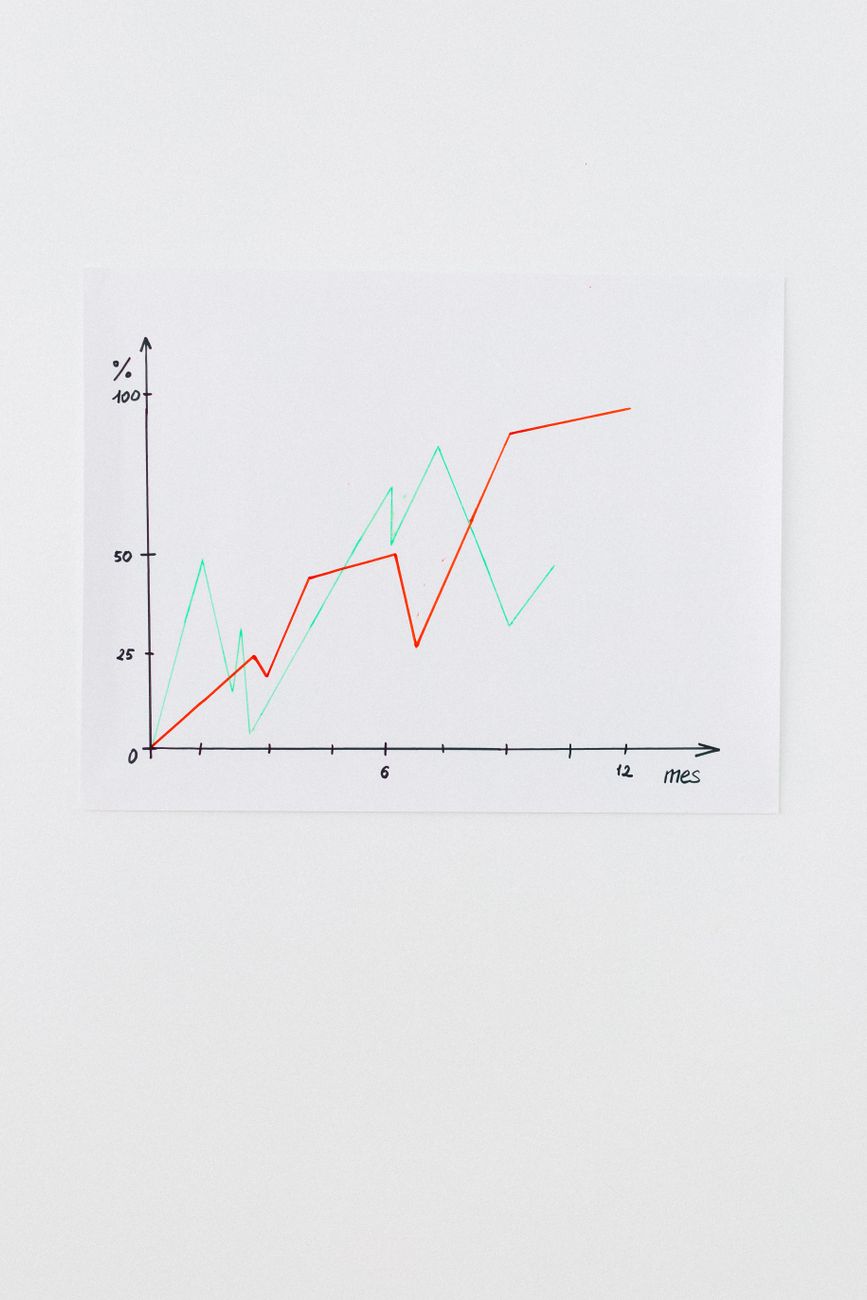
Every agency pitches content marketing, but few quantify what bad content actually costs. Thin pages can trigger Google's Helpful Content system penalties, dragging down an entire domain — not just the offending URL. A post that walks through a real (or anonymized) case study — showing traffic before and after a content purge, with exact metrics — will outrank every generic "content quality matters" article. Budget 2,500 words. This topic ranks because it answers a question decision-makers actually Google before approving a content audit budget.
- Angle: Before/after case study with real traffic numbers
- Target length: 2,200–2,600 words
- Keyword cluster: "content quality SEO impact," "thin content penalty 2026"
-
3. Email Marketing vs. SMS Marketing: Which Channel Wins in 2026?
Open rates for SMS hover around 98% versus email's 20–35% — yet email still generates a higher average ROI for most e-commerce brands. The nuance is what makes this topic rankable. A head-to-head comparison that breaks down cost-per-send, compliance requirements (TCPA for SMS, CAN-SPAM for email), and the use cases where each channel dominates will serve a marketer far better than another "email is not dead" post. Pair it with a decision flowchart and you have a resource people bookmark and share. If you want to explore both channels further, browse our content strategy articles for deeper tactical guides.
- Angle: Decision framework with compliance context, not a cheerleading piece
- Target length: 2,000–2,400 words
- Keyword cluster: "email vs SMS marketing 2026," "SMS marketing ROI"
-
4. How to Build a Social Media Content Calendar That Doesn't Fall Apart
Plenty of posts describe what a content calendar is. Almost none explain why most calendars fail by week three — and how to prevent it. The failure mode is almost always the same: too many platforms, no approval workflow, and no buffer of pre-approved evergreen posts. A post that diagnoses the failure pattern first, then provides a lean 4-week template with specific slot types (educational, promotional, UGC, reactive), will resonate with every social media manager who has watched a calendar collapse under a product launch. For tools that make this easier, check out Terra Market Group's free marketing tools — including Postigniter for social scheduling.
- Angle: Problem-first diagnosis with a downloadable or embedded template
- Target length: 1,800–2,200 words
- Keyword cluster: "social media content calendar 2026," "content calendar template"
-
5. YouTube SEO in 2026: What's Changed and What Still Works
YouTube's algorithm has shifted significantly toward watch time patterns and click-through rate from impressions rather than raw keyword density in titles. Many SEO guides still recommend tactics from 2021. A post that explicitly dates its advice — "this worked in 2022, here's what replaced it" — builds instant credibility. Cover chapter markers for search indexing, thumbnail A/B testing, and how Shorts affect long-form discoverability. At 2,000 words with embedded examples, this topic targets a query with high commercial intent from creators and brands alike.
- Angle: Explicitly updates outdated advice with current algorithm behavior
- Target length: 2,000–2,400 words
- Keyword cluster: "YouTube SEO 2026," "YouTube algorithm tips"
-
6. What a Full SEO Audit Actually Looks Like (Step-by-Step Walkthrough)
Most "SEO audit" posts list 30 things to check with no priority order and no context for what a finding actually means. A post that walks through a single fictional site — with screenshots, specific Lighthouse scores, and a triage matrix (fix now / fix later / ignore) — gives readers a mental model they can apply immediately. This is the format that earns backlinks from developers and marketers who want a reference they can share with clients. Running an audit yourself? SeoJama, our free SEO audit tool, is a solid starting point before diving into manual checks.
- Angle: Single-site walkthrough with triage priority, not a checklist dump
- Target length: 2,500–3,000 words
- Keyword cluster: "SEO audit checklist 2026," "how to do an SEO audit"
-
7. The Agency Growth Playbook: How Small Agencies Land Bigger Clients
Small agencies consistently lose pitches not because their work is worse, but because their positioning is vague. "We do everything digital" is not a differentiator — it's a red flag for enterprise buyers. A post that maps the exact positioning shift (from generalist to specialist), the proposal structure that closes, and the case study format that builds trust will speak directly to agency owners. This topic has strong search intent from a high-value audience. For more on scaling an agency, explore our agency growth content hub.
- Angle: Positioning strategy, not generic "get more clients" advice
- Target length: 2,000–2,500 words
- Keyword cluster: "digital marketing agency growth 2026," "how to get agency clients"
-
8. Short-Form Video vs. Long-Form: Which Format Drives More ROI?
The honest answer is: it depends on the funnel stage, and most articles refuse to say that. Short-form video (Reels, TikTok, Shorts) dominates top-of-funnel awareness, while long-form YouTube and webinar content closes deals. A post that maps format to funnel stage — with realistic production cost estimates and conversion benchmarks — gives marketers a framework for budget allocation rather than a platform preference argument. Include a section on repurposing: one 20-minute webinar can yield 12 Reels, three blog posts, and an email sequence.
- Angle: Funnel-stage mapping with production cost context
- Target length: 1,800–2,200 words
- Keyword cluster: "short form vs long form video marketing," "video marketing ROI 2026"
-
9. How to Write Blog Posts That Rank Without Backlinks
Link building is slow, expensive, and increasingly risky if done wrong. But there is a category of queries — low-competition, high-specificity informational searches — where a well-structured, deeply researched post can rank on page one with zero external links. The key is targeting keyword phrases with a Keyword Difficulty (KD) under 20 in Ahrefs or Semrush, matching intent precisely, and using structured data (FAQ schema, HowTo schema) to earn SERP features. This post is a gift to small business owners and solo bloggers who can't afford a link-building campaign.
- Angle: Zero-link ranking strategy for low-KD queries
- Target length: 1,800–2,200 words
- Keyword cluster: "rank without backlinks 2026," "low competition blog topics"
-
10. The Digital Marketing Skills That Are Actually Worth Learning in 2026
Prompt engineering, GA4 analysis, conversion rate optimization — the list of "must-learn" skills grows every year. What rarely gets discussed is which skills have the highest salary premium and which are being automated away. A post that cross-references job board data (LinkedIn, Indeed) with salary surveys to identify the top five high-ROI skills — with a learning path for each — serves both job seekers and hiring managers. For a deeper look at roles and salaries, read our guide on digital marketing jobs in 2026.
- Angle: Salary-data-backed skill prioritization, not a generic skills list
- Target length: 2,000–2,400 words
- Keyword cluster: "digital marketing skills 2026," "best marketing skills to learn"
-
11. Local SEO in 2026: The Google Business Profile Tactics That Move the Needle
Local search is one of the few SEO channels where a small business can outrank a national brand — if they know what signals matter. Google Business Profile (GBP) posts, Q&A management, photo upload frequency, and review velocity all influence the local pack ranking. Most local SEO guides bury the lead: review velocity (how fast you earn new reviews, not just the total count) is currently one of the strongest local ranking signals. A post that leads with that insight and backs it with a 90-day review-generation playbook will stand out immediately.
- Angle: Review velocity as the lead insight, with a 90-day action plan
- Target length: 2,000–2,400 words
- Keyword cluster: "local SEO 2026," "Google Business Profile optimization"
-
12. How to Use QR Codes in Your Digital Marketing Strategy
QR codes had a pandemic-era boom and then got dismissed as a gimmick. In 2026, they're quietly becoming a serious bridge between physical and digital marketing — especially for retail, events, and restaurant brands tracking offline-to-online conversions. The angle that ranks: treat QR codes as a tracking and attribution tool, not just a link shortcut. Show readers how to create UTM-tagged QR codes, embed them in print campaigns, and measure scan-to-conversion in GA4. You can generate a custom QR code instantly with Terra Market Group's free QR code generator.
- Angle: Attribution and tracking use case, not just "here's what a QR code is"
- Target length: 1,600–2,000 words
- Keyword cluster: "QR codes digital marketing 2026," "QR code tracking UTM"
-
13. Content Repurposing at Scale: Turning One Asset Into Ten
Repurposing is discussed constantly and executed poorly. The common mistake: teams repurpose format (blog post → tweet thread) without repurposing angle. A LinkedIn post that says "here's our new blog post" is not repurposing — it's a link dump. True repurposing extracts a different insight from the same research and packages it for a different audience's intent. Walk readers through a specific workflow: one 3,000-word pillar post → five LinkedIn carousels → three email sequences → two YouTube scripts → one webinar. Include the exact prompts and tools (Descript for audio, Canva for carousels) used at each step.
- Angle: Angle-first repurposing workflow with named tools and step counts
- Target length: 2,200–2,600 words
- Keyword cluster: "content repurposing strategy 2026," "repurpose blog content"
-
14. Paid Social in 2026: What's Working on Meta, TikTok, and LinkedIn Ads
Ad platform algorithms change faster than most guides update. Meta's Advantage+ campaigns now automate audience targeting in ways that make manual interest stacking obsolete for most advertisers. TikTok's TopView and Spark Ads serve different funnel stages. LinkedIn's thought leader ads are outperforming sponsored content for B2B lead generation. A post that benchmarks current CPM, CPC, and ROAS ranges by platform — with a clear recommendation for which platform fits which business type — gives media buyers and small business owners an immediate decision framework.
- Angle: Platform-by-platform benchmark data with business-type matching
- Target length: 2,200–2,600 words
- Keyword cluster: "paid social media ads 2026," "Meta TikTok LinkedIn ads comparison"
-
15. How to Build a Digital Marketing Strategy from Scratch (The 2026 Framework)
This is a perennial topic — but most versions are either too abstract ("define your goals") or too platform-specific ("post three times a week on Instagram"). The angle that cuts through: a constraint-first framework. Start by defining what you cannot do — budget ceiling, team size, platform restrictions — then build the strategy around those constraints. This approach mirrors how real marketing teams operate and produces advice that's actually implementable. A 2,500-word post with a decision tree and a 90-day milestone checklist will earn bookmarks, shares, and sustained organic traffic well into 2027.
- Angle: Constraint-first strategy framework with a 90-day milestone checklist
- Target length: 2,400–2,800 words
- Keyword cluster: "digital marketing strategy 2026," "how to build a marketing strategy"

Common Mistakes to Avoid When Executing These Topics
Picking a great topic is only half the battle. Three execution mistakes kill otherwise strong posts:
- Writing for the topic instead of the intent. A post titled "YouTube SEO 2026" could attract a beginner or an advanced creator. Decide which one you're writing for before the outline, not after.
- Burying the angle. If your unique point of view doesn't appear until paragraph six, most readers will leave before they reach it. State your argument in the first 100 words.
- Ignoring on-page structure. Google's crawlers and human readers both need clear headings, short paragraphs, and logical flow. A 3,000-word wall of text will underperform a 1,800-word post with clean structure every time.
- Skipping the update cycle. Year-specific posts decay fast. Build a reminder to review and refresh each post six months after publication — update statistics, replace outdated tool references, and re-promote.
Putting These Digital Marketing Blog Topics Into Your 2026 Calendar
Fifteen topics is roughly one post every three to four weeks for a full year — a sustainable cadence for most teams. Prioritize the topics that align with your existing content clusters first. If you already have strong SEO coverage, start with the AI Overviews piece (#1) or the full SEO audit walkthrough (#6). If your audience skews toward social media managers, lead with the content calendar post (#4) and the short-form vs. long-form comparison (#8).
Each topic above is a starting point, not a finished brief. The best-ranking posts in 2026 will be the ones that go deeper, get more specific, and take a clearer stance than anything currently on page one. That's the standard to beat — and it's absolutely achievable with the right research and a willingness to say something concrete.
Ready to build a content strategy that actually drives traffic? Get in touch with the Terra Market Group team — or explore our content strategy resources to keep building your editorial toolkit.