
Digital Marketing Tips 2026: How To Rank In an AI-First Search World

Why Keywords Alone Won't Save You in 2026
Every serious marketer needs to rethink their playbook right now. The digital marketing tips 2026 that actually move the needle look nothing like the advice that worked in 2022. AI-powered search engines — Google's AI Overviews, Perplexity, ChatGPT Search, and Bing Copilot — now answer millions of queries directly, without sending a single click to your site. If your strategy is still "rank for keywords and wait for traffic," you're building on sand.
This guide is not a neutral overview. It's a direct argument: authority, structured answers, and technical trust signals are the new ranking currency. Agencies and brands that understand this shift will capture AI-cited visibility. Those that don't will watch their organic traffic erode quarter by quarter.
Understand How AI Search Actually Decides What to Cite
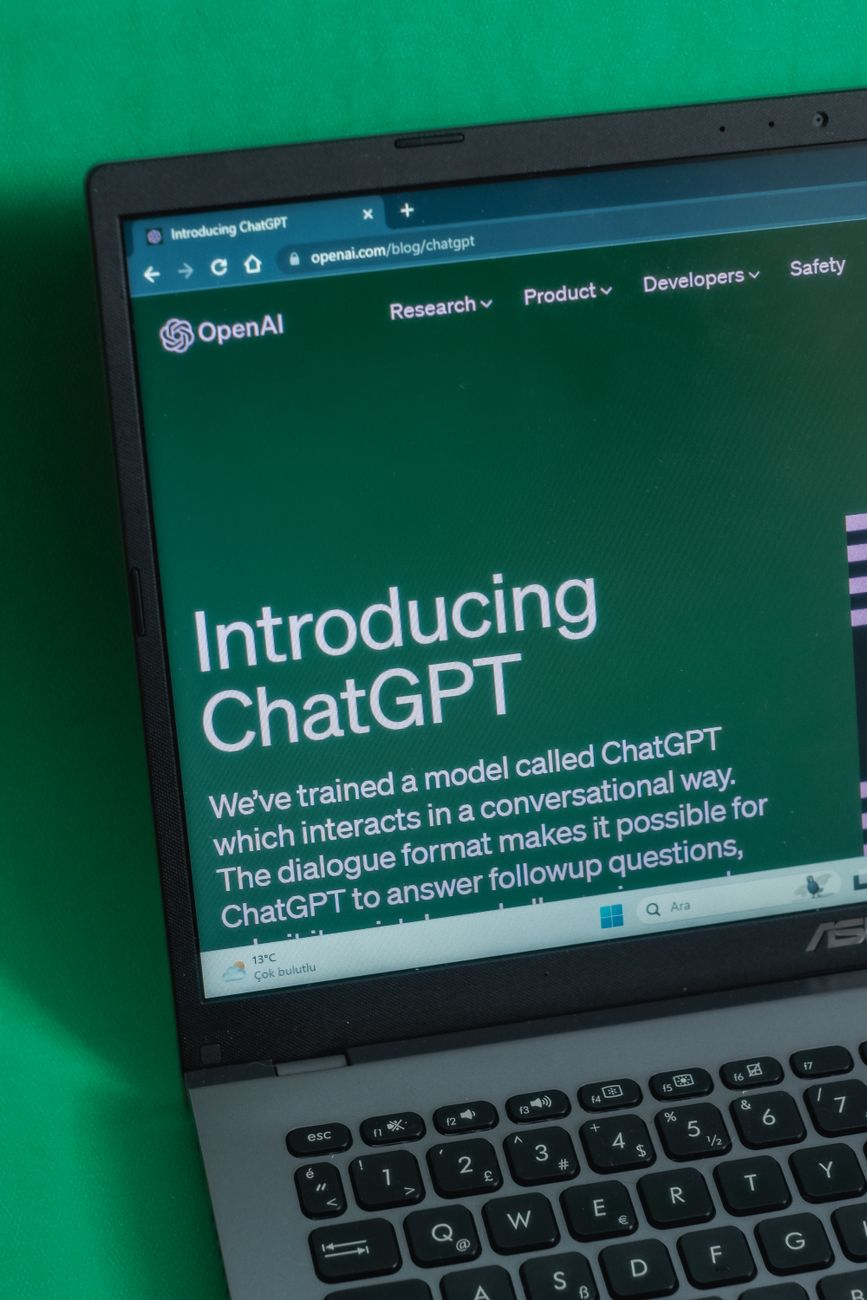
Large language models don't rank pages the way PageRank did. They pull from sources they consider credible, structured, and topically consistent. Google's own AI Overviews documentation confirms that cited sources tend to be those with strong E-E-A-T signals — Experience, Expertise, Authoritativeness, and Trust.
What does that mean practically? A page that answers one question brilliantly, with a named author, a clear publication date, and supporting schema markup, will outperform a 3,000-word wall of text that tries to cover everything. Perplexity, for instance, heavily favors pages that use clear heading hierarchies and FAQ-style formatting — because its retrieval pipeline can extract discrete answers cleanly.
The mistake most sites make: they optimize for crawlers but not for extractors. AI systems are extractors. They need your content to be modular — each section answering a specific question, standing on its own.
The Three Signals LLMs Weight Most Heavily
- Topical authority: Do you publish consistently on a narrow subject cluster? A site with 40 articles on local SEO beats a site with 400 articles on everything.
- Structured data: Schema markup (FAQ, HowTo, Article, Organization) tells AI systems exactly what your content is and who wrote it.
- Citation velocity: Are other credible sites linking to or mentioning your content? Backlinks still matter — but mentions in editorial contexts (not directories) matter more than ever.
Build Topical Authority Before You Chase Traffic
Topical authority is the single most underrated lever in 2026 SEO. It means owning a subject cluster so completely that search engines — human or AI — default to your site when that topic comes up. Think of it as becoming the Wikipedia of your niche, but with a clear editorial voice.
Here's how to build it methodically. Start by mapping every question your target customer asks across the entire buyer journey — awareness, consideration, and decision. Tools like AlsoAsked surface the exact question trees Google uses to understand topic relationships. Build one pillar page per major topic, then create five to eight supporting articles that answer specific sub-questions and link back to the pillar.
A realistic timeline: a focused content cluster of 10-12 articles, published over 90 days, typically begins earning AI Overview citations within four to six months — provided the technical foundation is solid. That's not a guarantee, but it's a realistic benchmark based on current patterns.
Don't skip the internal linking. Every supporting article should link to the pillar and to at least two other cluster articles. This signals to both Google and AI crawlers that your site treats the topic as a coherent, interconnected body of knowledge — not a collection of isolated posts.
Run a Technical SEO Audit — Then Actually Fix What You Find
Most sites have technical debt that quietly kills their AI-era visibility. Slow load times, broken internal links, missing schema, duplicate meta descriptions, and unoptimized Core Web Vitals all reduce the likelihood that an AI system will trust and cite your content. A thorough SEO audit is the foundation — not a one-time task, but a quarterly habit.
What should you audit? At minimum, cover these areas every quarter:
- Page speed and Core Web Vitals: Google's LCP (Largest Contentful Paint) threshold is 2.5 seconds. Pages above 4 seconds see a 123% higher bounce rate, per Google's own research. Use PageSpeed Insights to identify render-blocking resources.
- Schema markup coverage: Every article page should have Article schema. FAQ schema should appear on any page with a question-and-answer format. Organization schema belongs on your homepage.
- Crawl efficiency: Check your robots.txt and XML sitemap. If your sitemap includes 404 pages or noindexed URLs, you're wasting crawl budget — and AI crawlers have limited patience for messy sites.
- Internal link health: Broken internal links erode trust signals. A monthly crawl with a tool like Screaming Frog catches these before they compound.
- Mobile usability: Over 60% of searches happen on mobile. A site that fails Google's Mobile-Friendly Test will not earn AI citations at scale.
Terra Market Group's free marketing tools suite includes an SEO checker that surfaces the most critical on-page issues fast — without requiring a paid subscription. Start there, fix the flagged items, then layer in deeper audits as your site grows.
Optimize Content Around Questions, Not Just Keywords
Keyword research isn't dead — it's just not enough on its own. In 2026, the unit of content optimization is the question, not the keyword phrase. AI search systems are built to answer questions. If your content isn't structured around clear questions and direct answers, it won't get cited — even if it ranks on page one.
The practical shift is this: for every target keyword, identify the three to five questions that keyword implies. "Social media management," for example, implies questions like "How much does social media management cost?", "What does a social media manager actually do?", and "Which platforms should a small business prioritize?" Each of those questions deserves its own section — with a direct, one-to-two sentence answer at the top, followed by supporting detail.
This format is called inverted pyramid content: answer first, explain second. It's the opposite of how most blog posts are written, and it's exactly what AI extractors reward. A 1,200-word article structured this way will consistently outperform a 2,500-word article that buries the answer in paragraph six.
For agencies managing multiple clients, this question-first approach also makes content production more scalable. Writers don't need to "find their angle" — the angle is the question. The answer is the lead. The rest is evidence. If you want to go deeper on content structure for different business sizes, our content strategy resources cover frameworks that work across industries.
Social Search Is a Separate (and Growing) Channel
Here's what most SEO guides in 2026 still underweight: social search. TikTok, Instagram, and YouTube are now primary search destinations for Gen Z and Millennials. Google's own research found that nearly 40% of young adults use TikTok or Instagram as their primary search tool for certain query types — restaurants, product reviews, travel, and how-to content.
That means your content strategy needs to produce discoverable social content, not just blog posts. Short-form video that directly answers a question — with the question stated in the first three seconds — performs dramatically better than polished brand content. Captions should include the question as text, because platform algorithms index captions for search.
For YouTube specifically, video titles and descriptions should mirror the exact phrasing of the questions your audience types. YouTube's search algorithm is closer to Google's than most people realize. A video titled "How to Write a Social Media Caption That Gets Clicks" will rank for that query; a video titled "Our Top Social Media Tips" will not.

Email and SMS Marketing: Your AI-Proof Owned Channel
No algorithm controls your email list. No AI Overview can intercept a well-timed SMS. While organic search gets more competitive and AI intermediaries absorb more clicks, owned channels become proportionally more valuable. This isn't a consolation prize — it's a strategic advantage that compounds over time.
The agencies winning in 2026 treat email and SMS as conversion engines, not newsletters. That means segmenting by behavior (not just demographics), sending triggered sequences based on what a subscriber clicked or bought, and testing subject lines with the same rigor applied to ad copy. A 25% open rate is achievable for segmented lists in most B2B niches. A 35% open rate is achievable with strong personalization and send-time optimization.
SMS has even higher engagement — median open rates above 90% — but it demands restraint. One poorly timed or irrelevant message can trigger an unsubscribe. Use SMS for time-sensitive offers, appointment reminders, and abandoned cart recovery. Reserve email for nurture sequences, educational content, and relationship-building. The two channels complement each other; they're not interchangeable.
If you're building or refining your agency's digital marketing approach, our agency growth resources include practical guides on building owned-channel revenue that doesn't depend on search algorithm changes.
Measure What AI-Era Search Actually Rewards
Traditional SEO metrics — keyword rankings, organic sessions — are increasingly incomplete. A page can drop from position three to position eight and still receive more qualified traffic if it earns an AI Overview citation. Conversely, a page can hold position one and see traffic fall 40% because AI Overviews are absorbing the clicks above it.
The metrics that matter now:
- Brand search volume: Are more people searching your brand name? This signals growing authority and is a leading indicator of AI citation likelihood.
- Direct and referral traffic: As AI absorbs informational queries, direct traffic and branded referrals become better proxies for real audience growth.
- Conversion rate by channel: Organic traffic that converts at 0.5% is worth less than email traffic that converts at 4%. Track channel-level conversion, not just volume.
- AI citation tracking: Manually check whether your brand or content appears in AI Overview answers for your target queries. Tools like Semrush's AI Overviews tracker are beginning to systematize this.
- Engagement depth: Time on page, scroll depth, and return visits signal content quality to both Google and LLM training pipelines.
Reframe your reporting around these signals and you'll make better decisions — and make a more compelling case to clients who are still fixated on position-one rankings that may no longer tell the full story.
The Agency Advantage: Combining Tools, Authority, and Speed
Independent brands can execute most of what's described here. But a skilled digital marketing agency compresses the timeline significantly. The reason isn't just resources — it's pattern recognition. An agency that has run SEO audits across 50 sites in a niche knows which technical fixes move the needle fastest. It knows which content formats earn citations and which get ignored. That accumulated knowledge is genuinely hard to replicate solo.
The agencies that will dominate 2026 are those combining three things: deep topical authority in their clients' niches, a repeatable technical audit process, and strong owned-channel infrastructure (email, SMS, social). None of these requires an enormous budget. They require consistency, clear systems, and the discipline to measure what actually matters.
Ready to build a strategy that survives algorithm shifts and AI disruption? Get in touch with Terra Market Group to explore how we combine SEO, content, and owned channels into a single, measurable growth system. Or explore our free tools to start auditing and optimizing your digital presence today — no subscription required.